Carousel Rides: Sizes, Options and Honest Factory Advice
We weld carousel frames, lay fiberglass horses by hand and pack them into containers every week. Here is what we tell buyers when they visit the workshop — including the options worth paying for and the ones that are not.
- Upper Drive or Lower Drive — the First Decision
- Standard Trim vs Deluxe Trim — Where the Money Actually Goes
- How the Horses Are Made — Fiberglass, Not Plastic
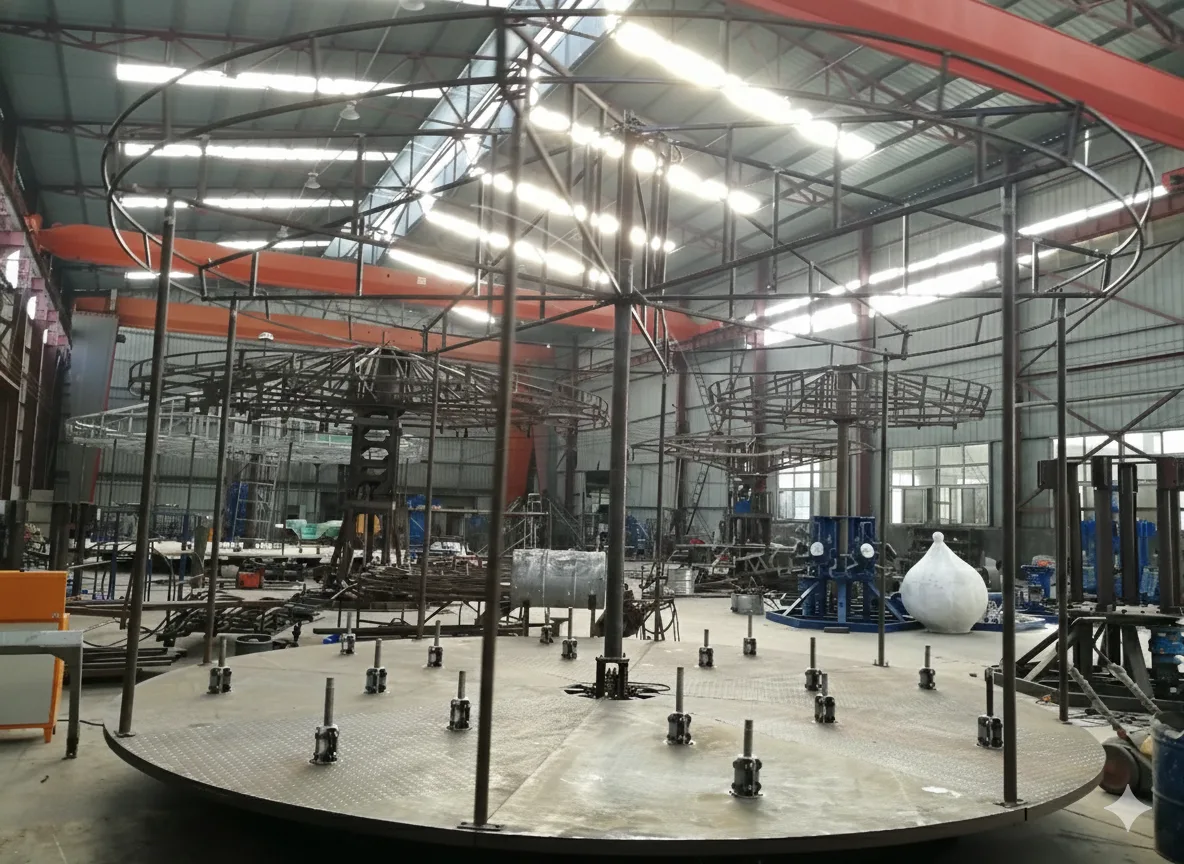
- Under the Platform: Steel, Bearings and Welds
- Which Size Fits Your Site? The Whole Range With Links
- Packing and Shipping a Machine That Arrives Whole
- Questions We Get at the Workshop
Every amusement park has one ride that grandparents, parents and toddlers queue up for together. It is never the roller coaster. It is the carousel. A family that rides nothing else will ride the carousel twice, photograph it three times, and remember it for years — which is why almost every park we ship to, from a 200 m² indoor playground to a full theme park, starts its order with one.
Carousels also look simpler from the outside than they are. Two machines with the same diameter and the same horse count can be years apart in how long they last. This guide walks through the differences the way we explain them on the factory floor, with real numbers from our own workshop.
Upper Drive or Lower Drive — the First Decision
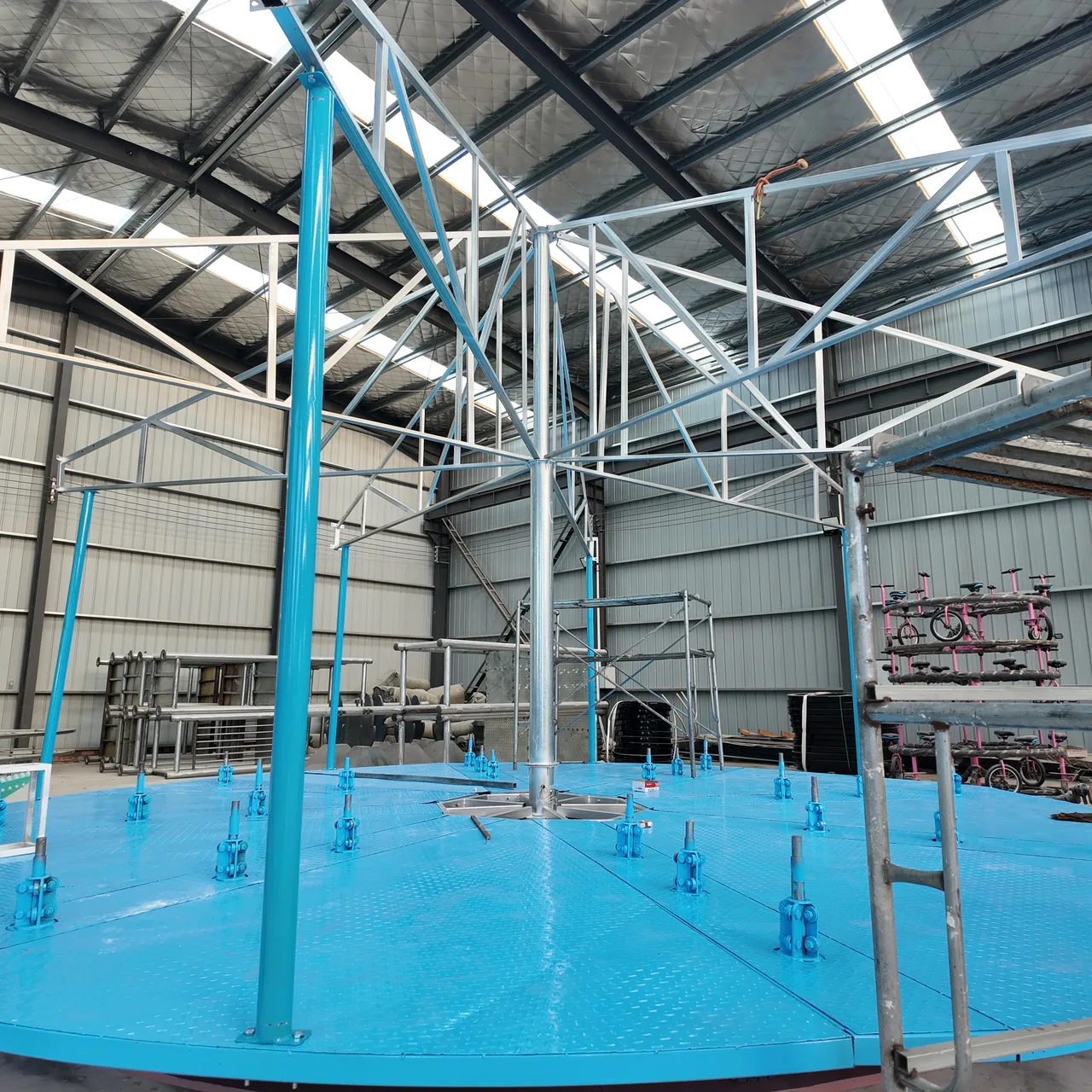
There are two ways to spin a carousel. Lower drive puts the motor inside the platform: wheels and bearings under the deck carry the whole rotating ring, and the motor drives them from below. Upper drive hides the motor in the space between the inner ceiling and the outer canopy, driving the ride from the top through transmission rods.
- Lower drive is simpler to install and maintain — the drive sits at floor level, so a technician reaches everything without climbing. It is the standard choice for most malls, playgrounds and single-tier parks.
- Upper drive gives the smoothest motion on large double-deck machines and keeps the platform completely free of drive hardware. It costs more and needs taller ceiling clearance.
- "Fake upper drive" is a lower-drive machine with decorative transmission rods added for the classic look. We sell a 24-seat version — buyers get the appearance without the extra motor and structure overhead.
Our honest advice: below 30 seats, buy lower drive and spend the difference on better fiberglass and lights. Above 40 seats or any double-decker, real upper drive earns its cost.
Standard Trim vs Deluxe Trim — Where the Money Actually Goes
Two carousels can sit side by side, look nearly identical in photos, and be built for different lifetimes. Here is the exact comparison we walk through with customers choosing between our standard and deluxe packages:
| Component | Standard | Deluxe (deluxe package) |
|---|---|---|
| Fascia (eave trim) | Single fascia — best indoors | Double fascia — sheds rain, for outdoor use |
| Canopy | Polycarbonate sheet, ~3-year life | Fiberglass, ~10-year life |
| Skirt (apron) | Fiberglass | Fiberglass |
| Crown tip | Small tip | Large tip — better silhouette |
| Center panels | Polycarbonate | Fiberglass |
| Platform | Checkered steel plate | Aluminum-faced board |
| Horses | Spray-painted finish | Hand-painted + baked enamel |
| Light trough | Standard | Stainless steel |
| Tyres | Pneumatic | Solid — cannot go flat |
| Start/stop | Direct | Variable frequency drive — gentle ramp-up and stop |
If the machine lives outdoors, the two lines worth every dollar are the fiberglass canopy and the double fascia — a polycarbonate canopy will look tired in three coastal summers. If it lives indoors in a mall, you can safely take standard trim and redirect the budget into lighting, which sells tickets more than any canopy does.
How the Horses Are Made — Fiberglass, Not Plastic
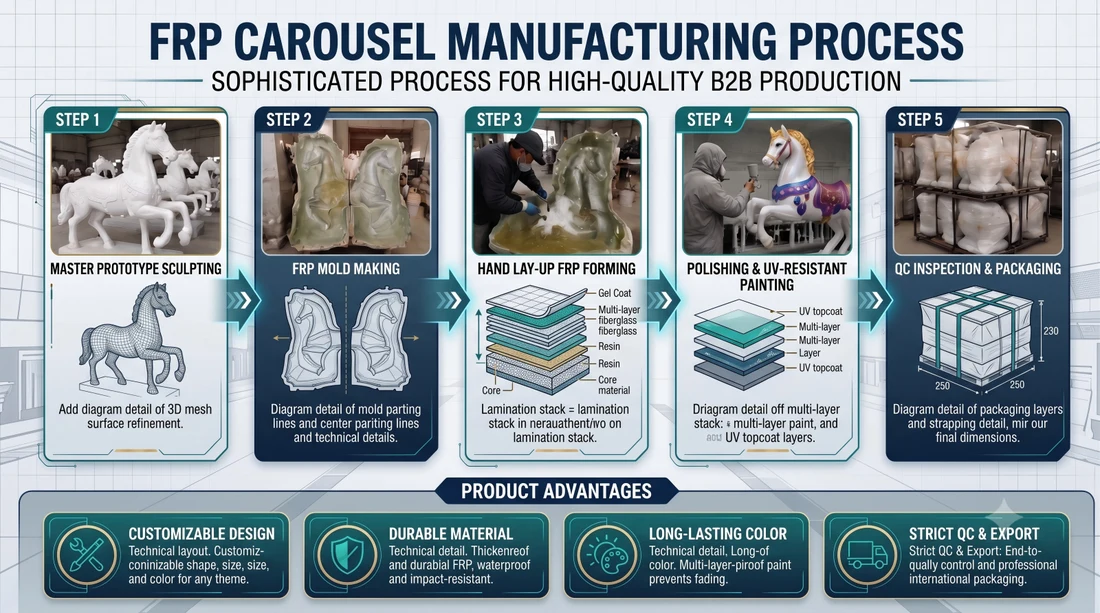
Every horse starts as a hand-sculpted master model. From it we pull a mold, and into that mold workers lay fiberglass by hand — mat, resin, mat, resin — building up the shell layer by layer. After curing, each horse comes out raw and chalk-white, gets its seams cleaned, primer and a base coat, and only then the decorative work: on deluxe units a painter does the mane, saddle and harness by hand before the baked-enamel topcoat goes on.
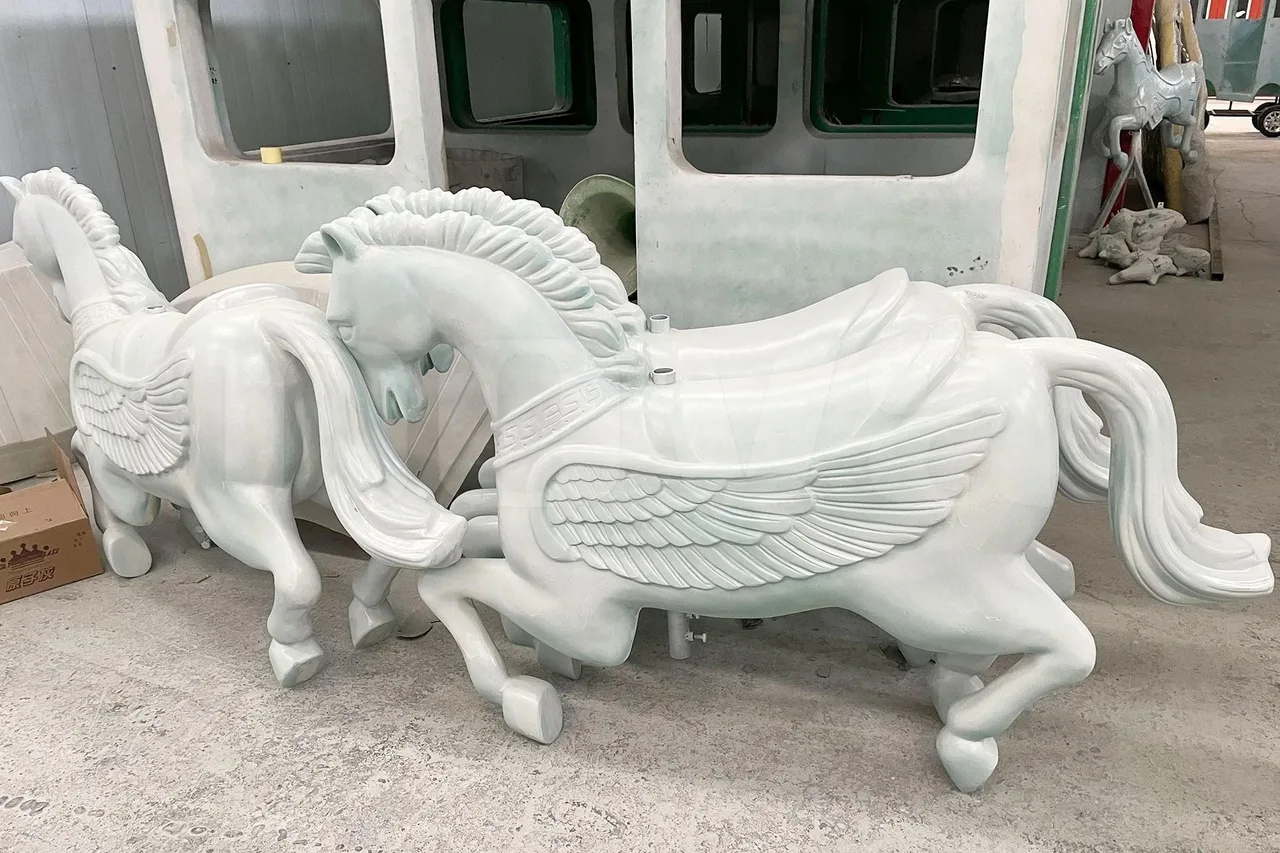
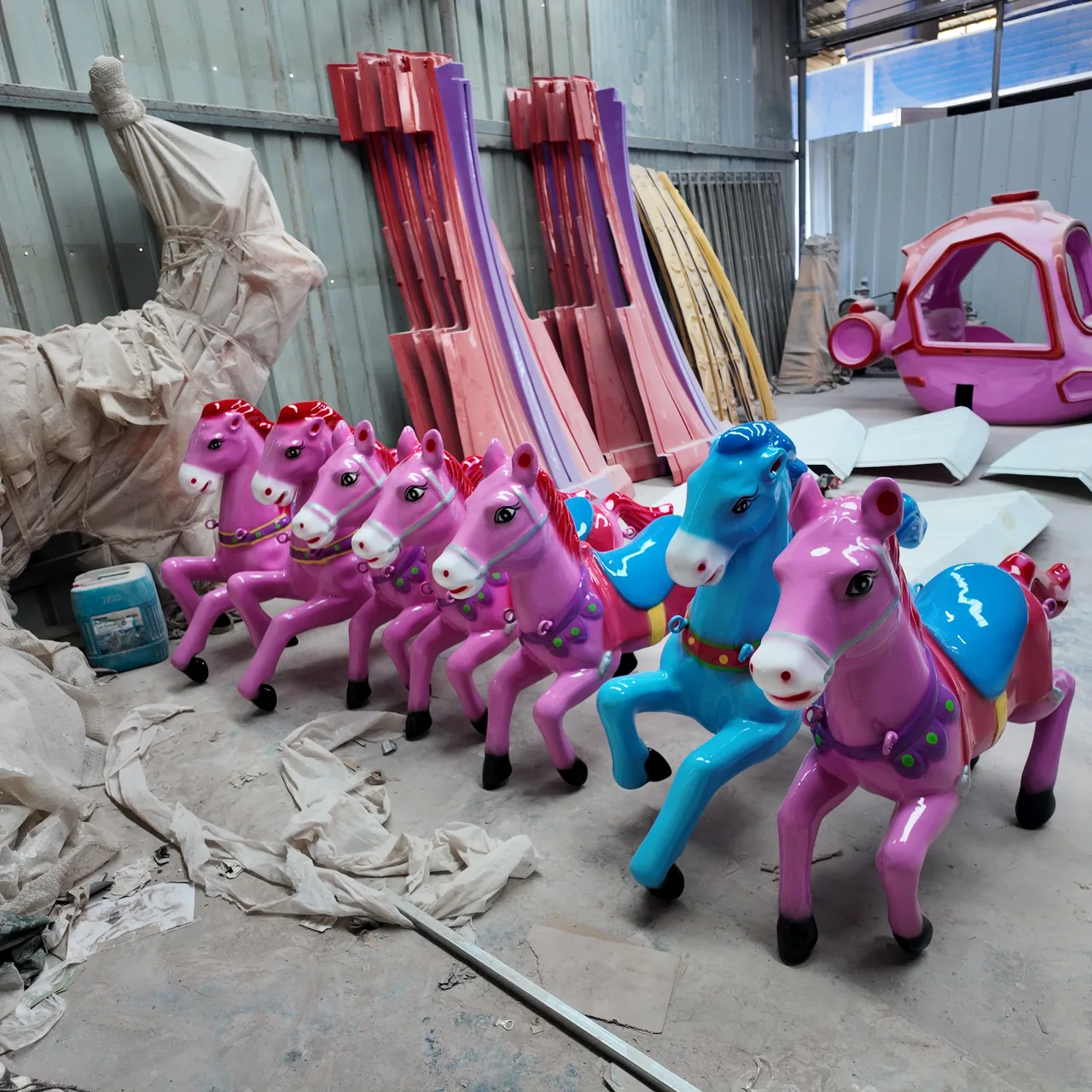
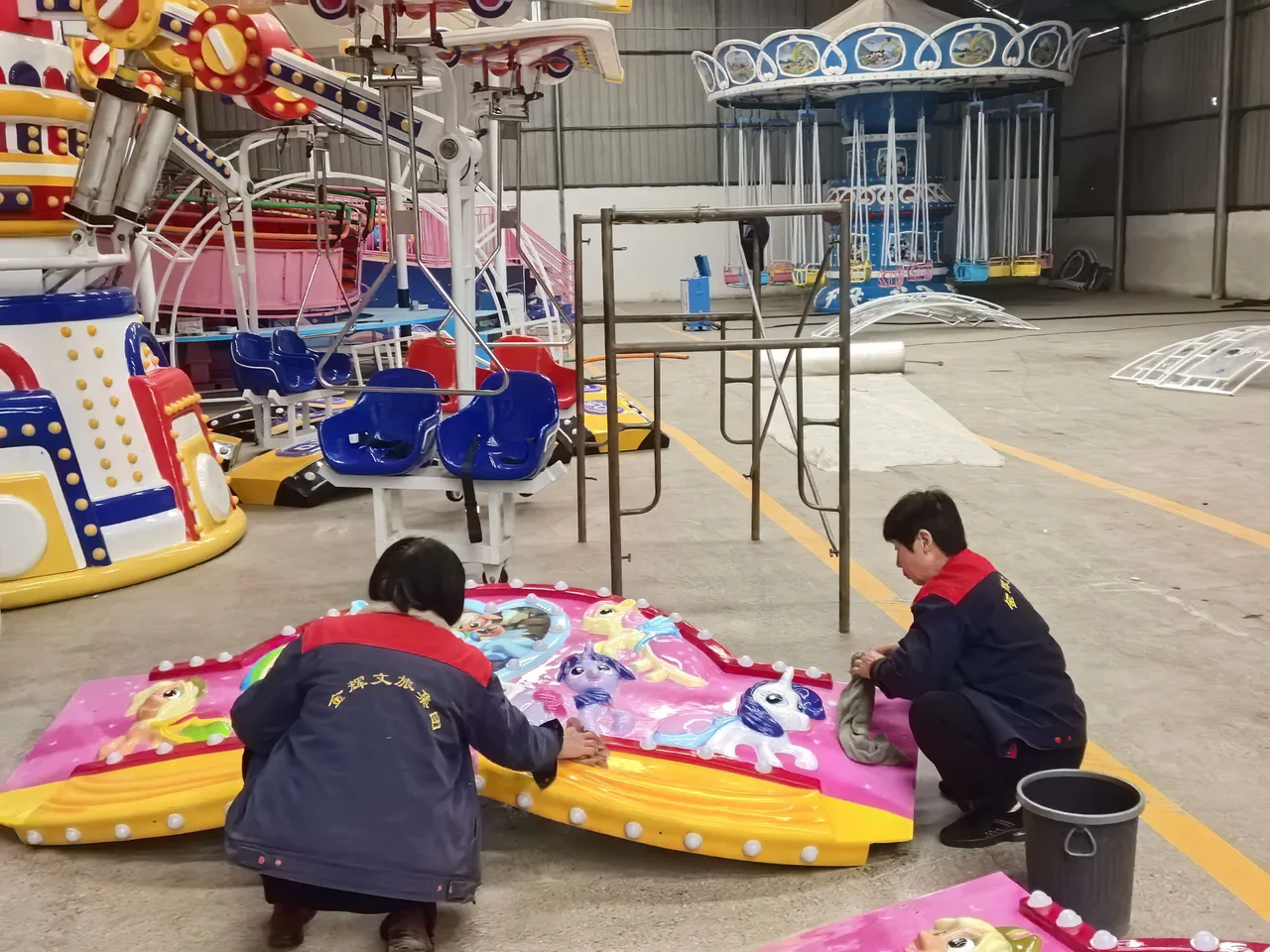
Why does this matter to a buyer? Hand-laid fiberglass is repairable — a cracked panel can be patched and repainted invisibly in the field. Cheap injection shells cannot. It is also why our horses survive ten seasons of children climbing on them: the material flexes instead of shattering.
Under the Platform: Steel, Bearings and Welds
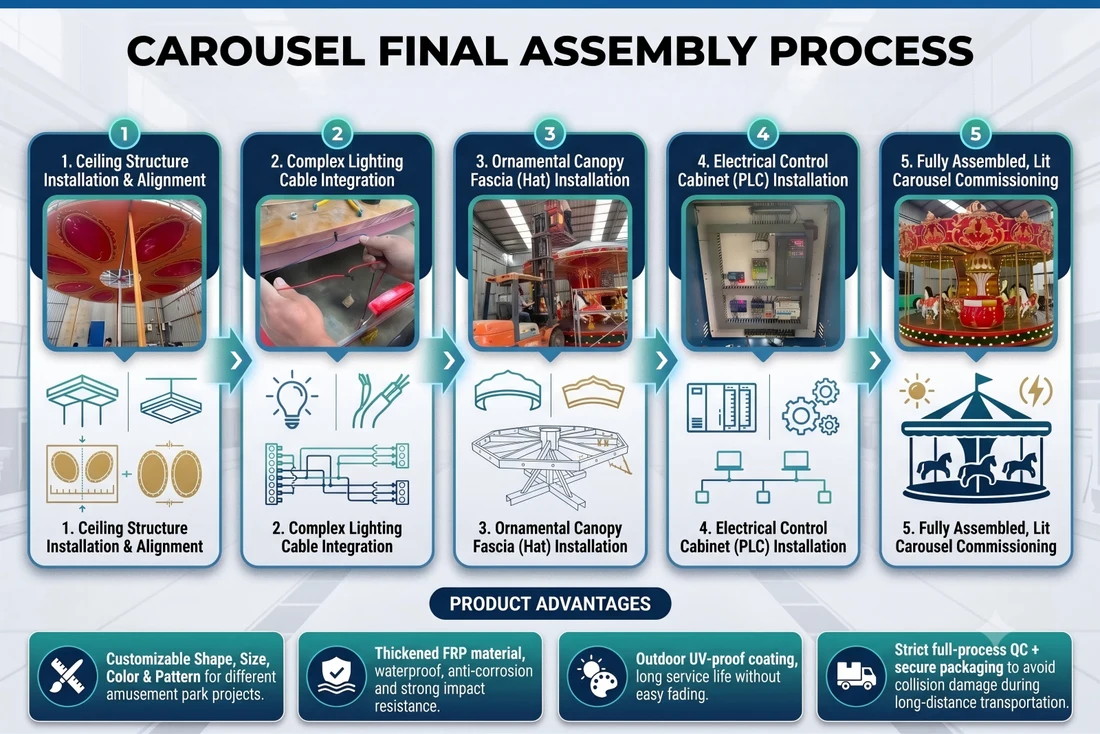
The part nobody photographs is the part that decides whether the carousel is still running in year eight. Our frames are jig-welded steel with the drive built around sealed SKF bearings (model 22218 on most platforms); every structural weld is inspected with non-destructive testing before paint. The rotating platform must run true — an out-of-round deck shows up a year later as uneven tyre wear and a ride that rocks.
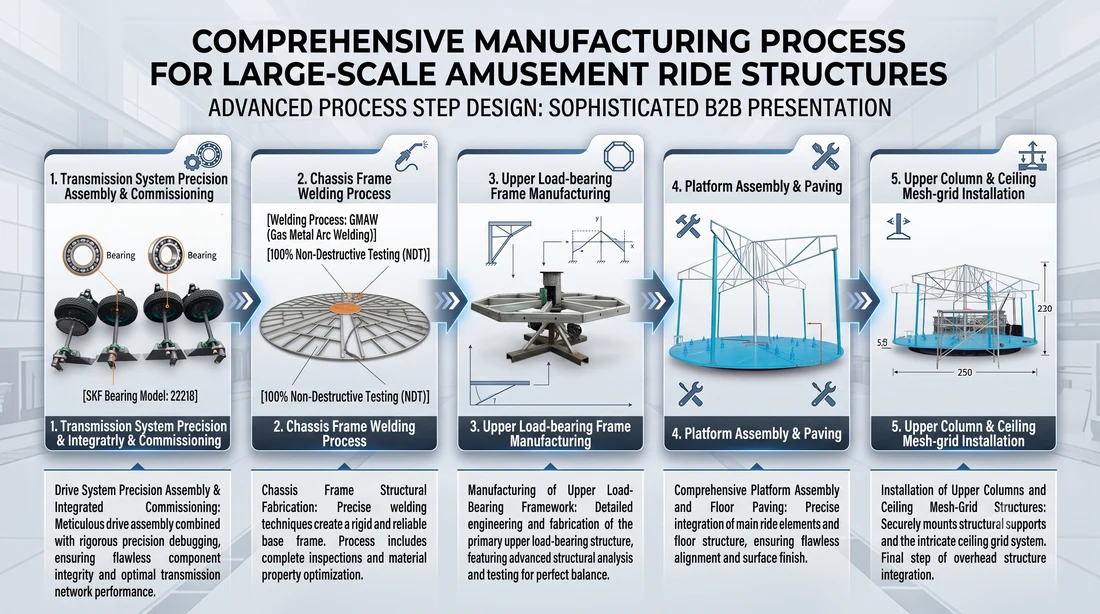
Every unit also gets a variable-frequency control cabinet: the ride ramps up and brakes down gently instead of jerking to speed, speed is adjustable on the panel, and the operator gets remote control, timer, music and the LED program on the same cabinet.
Which Size Fits Your Site? The Whole Range With Links
We build carousels from a 2.1-meter coin-op mini to an 11.5-meter double-decker. The full series lives on our <a href="/products/carousels/">carousels collection page</a>; here is the quick comparison with the honest use case for each:
| Model | Diameter | Seats | Riders/hour | Power | Best for |
|---|---|---|---|---|---|
| Christmas Mini Carousel | 2.1 m | 6 | — | 1.6 kW | Lobbies, malls, holiday corners |
| Carousel 4 m | 4.1 m | 10–12 | 420–500 | 3 kW | Small indoor playgrounds |
| Carousel 5 m | 5 m | 20 | ~550 | 2.5 kW | Indoor parks, FEC anchor ride |
| Carousel 7 m | 7 m | 26 | ~600 | 4.5 kW | Mid-size outdoor parks |
| Carousel 8.5 m | 8.5 m | 34 | ~800 | 4.5 kW | Busy family parks |
| Carousel 8.5 m (40) | 8.5 m | 40 | ~900 | 4.5 kW | High-traffic outdoor sites |
| Carousel 10 m | 10 m | 44 | ~1,000 | 5 kW | Theme-park main midway |
| Carousel 10 m double-deck | 10 m | 52 | ~1,200 | 5 kW | Parks that need a landmark |
| Carousel 11.5 m | 11.5 m | 48 | ~1,200 | 5 kW | Large theme parks |
| Carousel 11.5 m double-deck | 11.5 m | 78 | ~1,500 | 7.5 kW | Flagship installations |
Two sizing rules from experience: leave at least 1.5 m beyond the roof diameter on all sides so riders can queue and parents can walk past, and check your ceiling — indoor venues need clear height of the machine height plus about 0.5 m. For malls and family entertainment centers that want themed animals instead of horses, our <a href="/products/carousels/kiddie-carousels/">kiddie carousel category</a> covers the smaller themed units.
Packing and Shipping a Machine That Arrives Whole
A carousel travels as a kit: platform in sections, frame disassembled at the weld joints, horses crated individually in steel-framed wooden boxes with foam wrapping, canopy panels flat-packed. We pack the horses like furniture because they are the part you cannot easily replace.
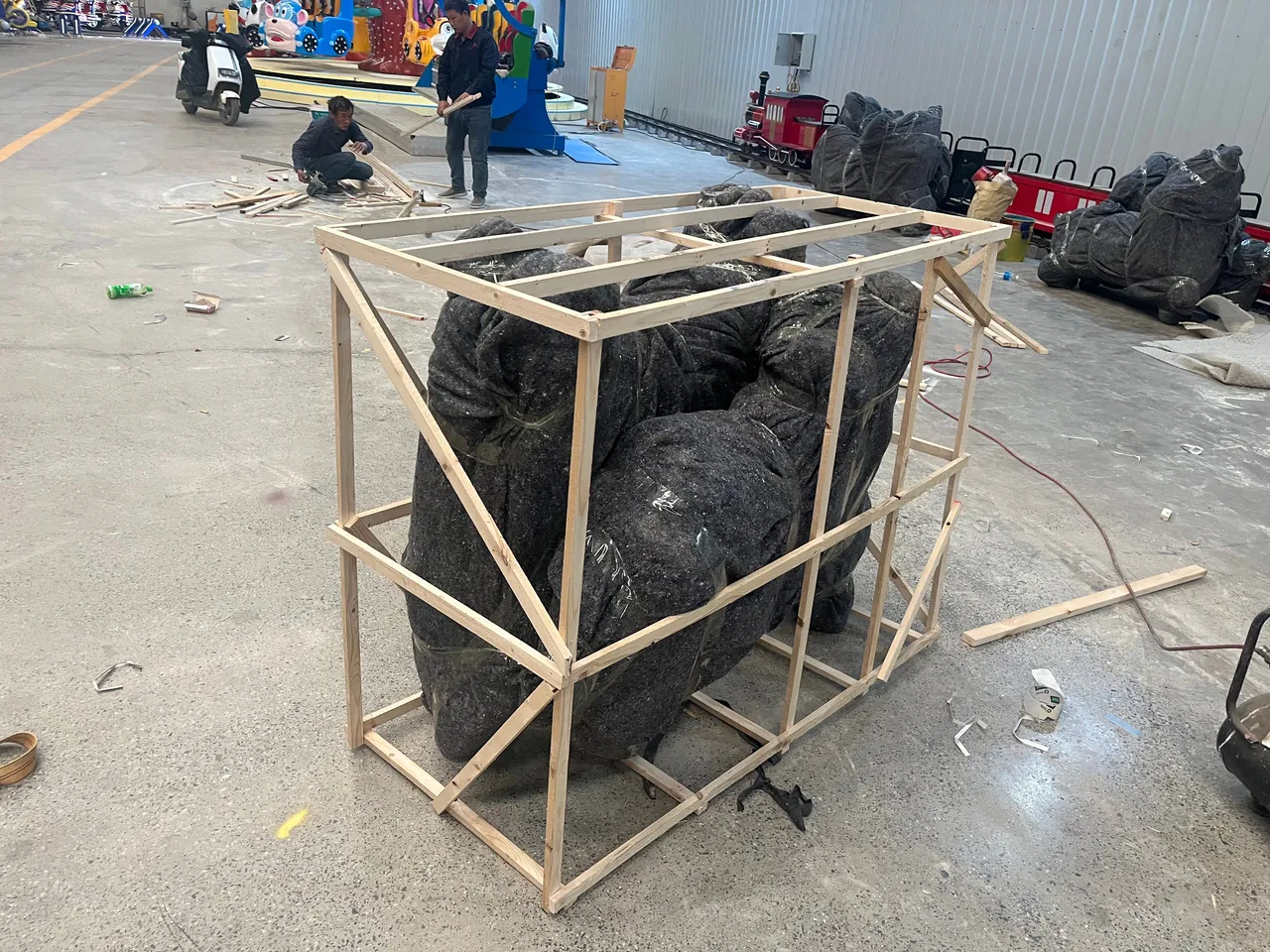
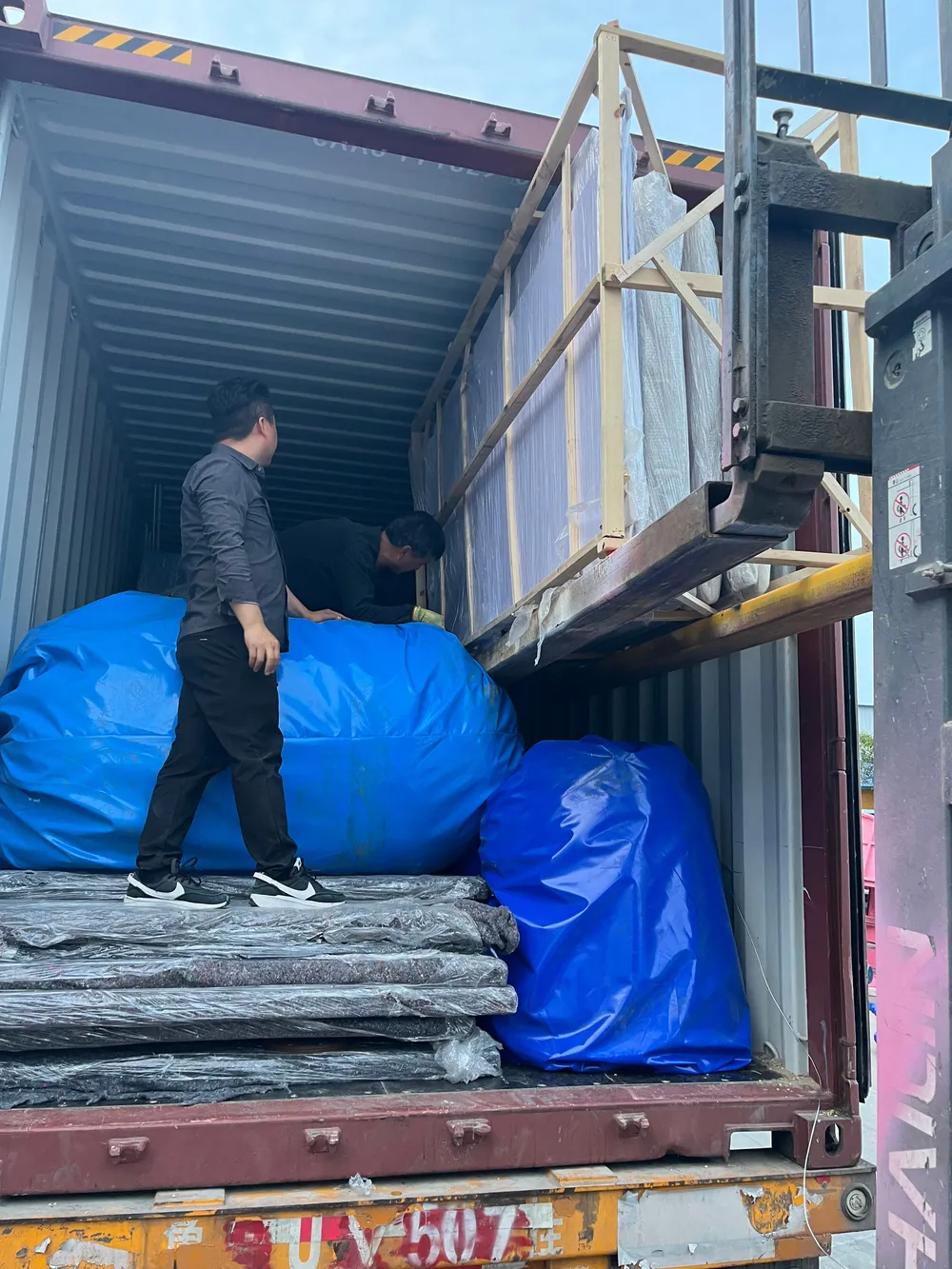
A 20-seat machine typically fills one 40-foot high-cube container; double-deckers take two to three. Every shipment includes assembly drawings, a labeled bolt kit, and video call support from our own installation team — most customers complete assembly in five to eight days with a local crew and a small crane.
Questions We Get at the Workshop
- Can I order custom horses or themes? Yes — ocean animals, Princess Carriages, licensed-style ponies, anything sculptable. Custom masters add roughly 2–3 weeks to production.
- How long is production? Typically 25–35 days for standard sizes, longer for double-deckers or full custom themes.
- Will the paint fade outdoors? The deluxe package uses UV-resistant baked enamel over hand-painted base coats; standard spray paint starts to chalk earlier, especially in coastal sun.
- Do you install on site? We send engineers for large double-deck units; smaller machines go up with our drawings plus video guidance — customers report 5–8 days with a local crew.
- What about voltage? Cabinets are built for 380 V or 220 V, 50/60 Hz — tell us your country’s standard when ordering.
Not sure which size your floor plan can take? Send us the site dimensions on WhatsApp or the quote form — we will reply with the biggest carousel that fits, the realistic seat count, and a factory-direct price for both standard and deluxe trim so you can compare in one message.
Frequently Asked Questions
What is the difference between upper drive and lower drive carousels?
Lower drive keeps the motor in the platform — simpler to install and service, standard for machines under 30 seats. Upper drive mounts the motor between the ceilings and drives the ride from above, giving the smoothest motion on large and double-deck machines. Decorative “fake upper drive” versions offer the classic look with lower-drive mechanics.
Which carousel size should I buy for a mall or indoor park?
A 4–5 meter carousel (10–20 seats) suits most indoor venues: the 4 m needs roughly 5×5 m of floor, the 5 m fits a main atrium and handles about 550 riders per hour. Check ceiling clear height before ordering — machine height plus about 0.5 m.
How long does a fiberglass carousel canopy last?
Our deluxe fiberglass canopy and fascia are rated for about 10 years outdoors; standard polycarbonate canopy starts to cloud and yellow in roughly 3 years. For outdoor installations the fiberglass package is the upgrade we recommend first.
How are carousel horses manufactured?
Each horse is hand-sculpted as a master model, a fiberglass mold is pulled from it, and shells are hand-laid fiberglass — mat and resin layered by hand. Deluxe horses are then hand-painted and finished with baked enamel, which resists UV fading far better than spray paint.
How is a carousel packed for shipping?
The platform ships in sections, the frame at its weld joints, and every horse in a foam-wrapped, steel-reinforced wooden crate. A 20-seat unit fills one 40 ft high-cube container; assembly drawings, labeled hardware and video support are included.
Buying a ride is a 10-year relationship with a factory. Choose the partner, not just the price.
Get Personalized Advice
Our engineers answer buyer questions daily — site fit, budgets, documents for your market.
Continue Reading
- Bumper Cars: What We Tell Buyers at the Factory (Not in the Brochure) →
- How to Choose an Amusement Ride Manufacturer in China →
- How Much Does an Amusement Ride Cost? 2026 Price Guide →
- Importing Amusement Rides: Shipping, Customs & Installation →
- Amusement Ride Safety Standards: CE, ISO & Third-Party Inspection →