Trackless Sightseeing Trains: Sizes, Power Options and Factory Prices
We build trackless sightseeing trains every month and quote them to parks, zoos, resorts and scenic areas on five continents. This is the same walk-through we give buyers who visit the workshop — sizes, drive options, what fits in a container, and the numbers behind the price.
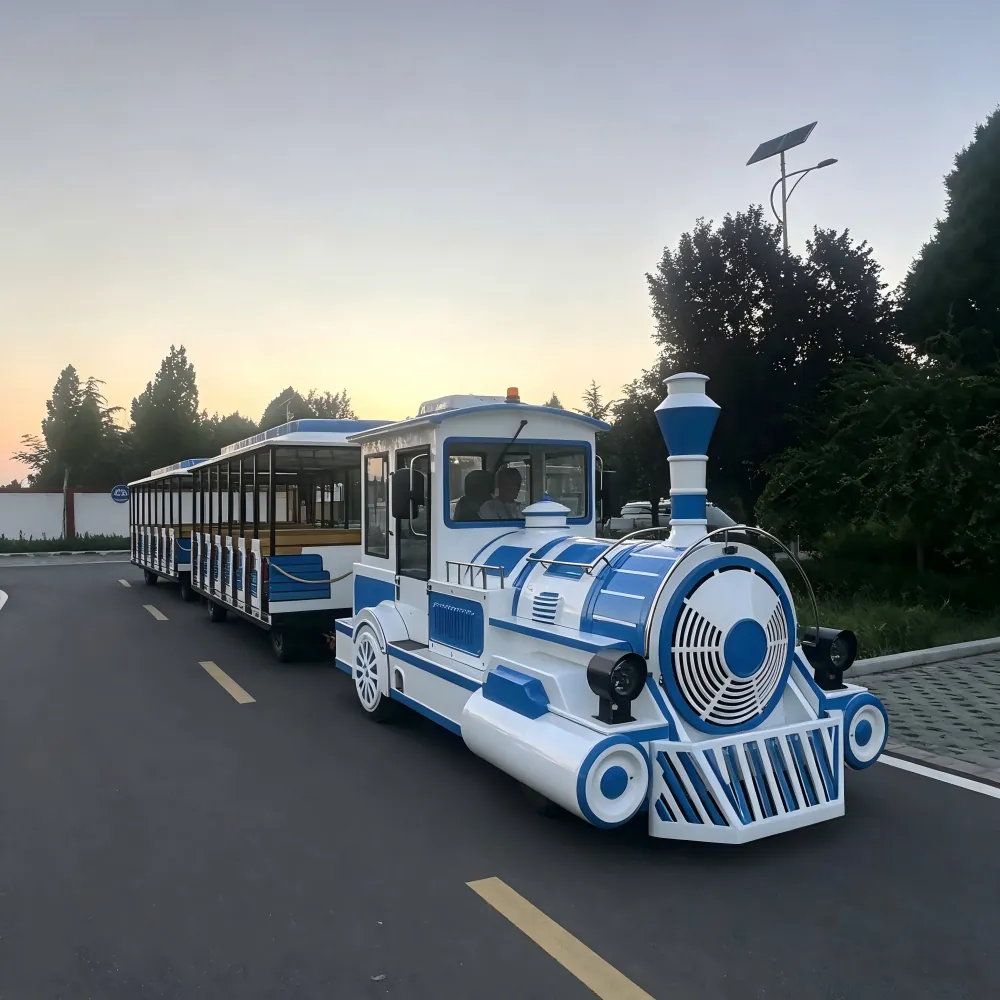
A trackless train is the cheapest way to move a lot of visitors through a park, and the fastest to put into service: no rails, no foundations, no civil works. You lay the route with cones or kerbs, train two drivers, and the train earns money the same week it clears customs. That is why this model outsells every tracked train we make.
Trackless, Tracked, or Just a Big Golf Cart?
Trackless trains run on pneumatic tyres over concrete or asphalt and are steered by the driver. Tracked trains need a rail loop on a prepared bed, but they run themselves at fixed speed and never take a wrong turn. If your site is already paved, has walkways wider than about 3 m, and you want to move the route for events, go trackless. If you are building a dedicated ride inside one fenced area and want hands-off operation, rails still win.
The trains below are the road-going type — the same family hotels, airports, zoos and resorts buy. They steer and brake like a light truck, and in most countries they are registered locally as low-speed tourist vehicles.
Diesel or Electric: Three Numbers Decide It
Buyers argue about this for weeks, then choose in five minutes once the numbers are on the table. Range and fast refuelling sit on one side; running cost and silence on the other.
| Diesel sightseeing train | Electric sightseeing train | |
|---|---|---|
| Drive | Cummins ISF 2.8 L electronic diesel, 96 kW (130 HP), Euro IV | 20 kW traction motor, 72 V 800 A battery pack |
| Top speed | 20 km/h | Up to 19 km/h |
| Service range | 120–180 km per fill | Depends on pack size and load; charged overnight |
| Gradient | Suited to long routes with slopes | 4% rated, 7% fully loaded |
| Best for | Scenic routes, hills, all-day duty, sites without charging | Parks, resorts, airports, quiet and indoor zones |
| Indicative price | US$ 8,000 – 52,000 | US$ 6,000 – 55,000 |
Sizing the Train: 42, 58 or 72 Seats
Once the drive is settled, size is really a route question. Seats you cannot fill cost money on every trip; seats you run out of cost you passengers at the gate.
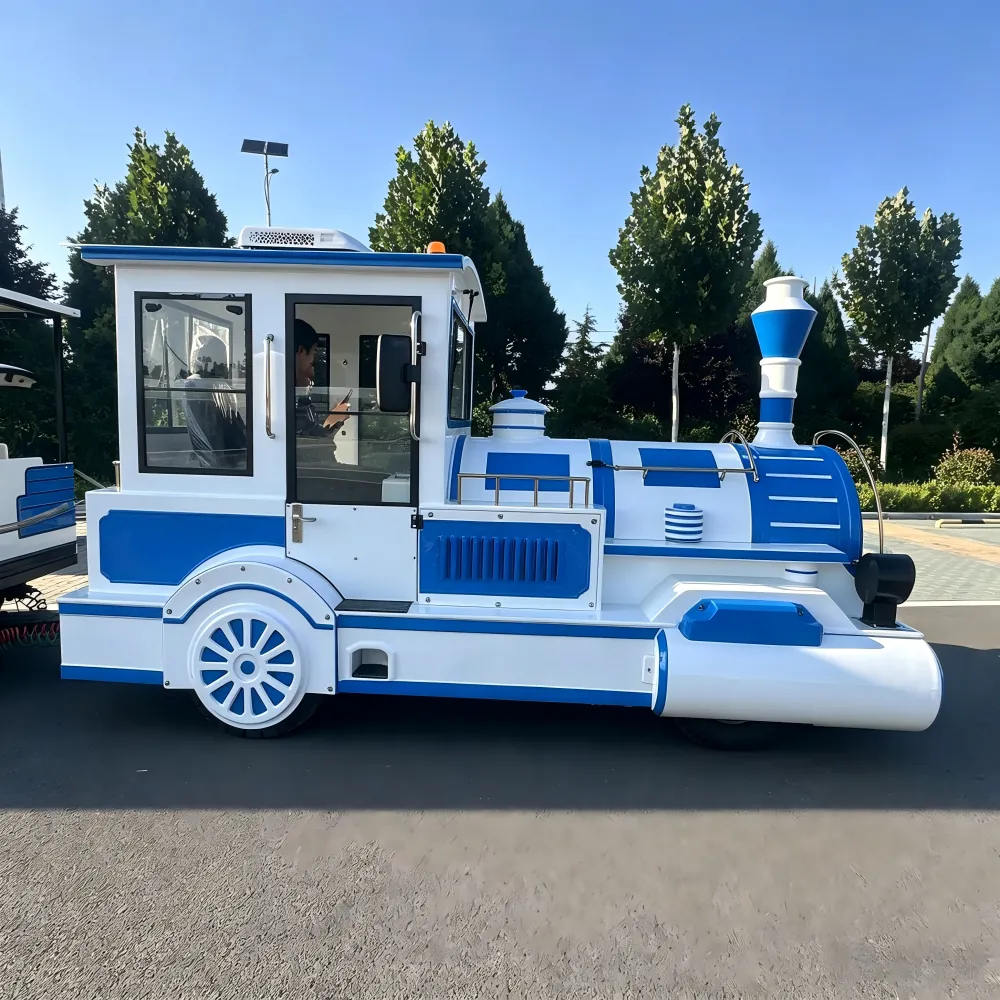
- 42 seats — short loops inside one park, tight paths, one carriage. Locomotive body is 4,200 x 1,980 x 2,500 mm.
- 58 seats — the middle option most family parks choose, still short enough to turn inside a normal plaza.
- 72 seats — long scenic routes and large sites. Carriage grows to 5,700 x 2,270 x 2,500 mm and the whole train reaches 17.1 m, so measure your tightest corner first.
The electric 72-seat train is a 2-seat locomotive plus two 35-seat carriages, and the same chassis accepts a third carriage where the route allows. Turning radius matters more than length: the 72-seat train needs 8 m of outer clearance, which most park paths already provide.
What Actually Fits in the Container
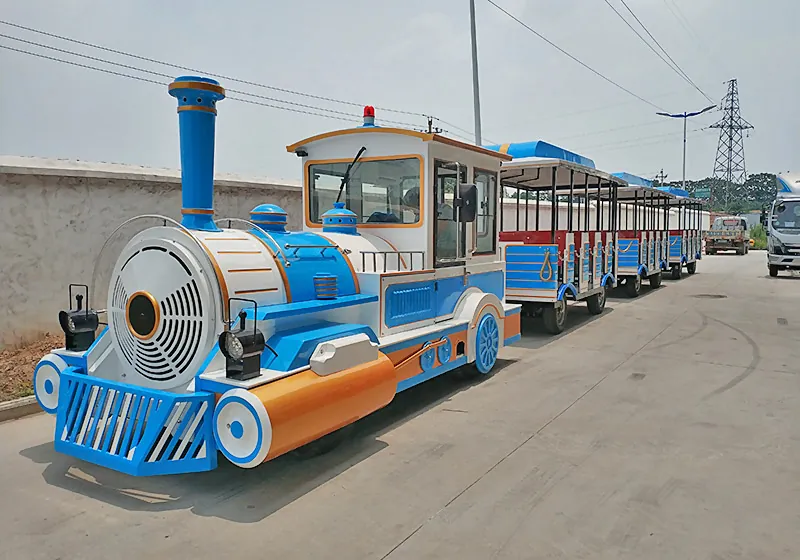
A 72-seat electric train packs into one 45 ft container. A 42-seat diesel train with a single carriage fits a 40 ft high cube. Check this before you sign: freight is quoted per container, and one container instead of two changes the delivered cost more than any negotiation on the train itself. We issue packing drawings with every quotation so your broker can see the volume before the deposit is paid.
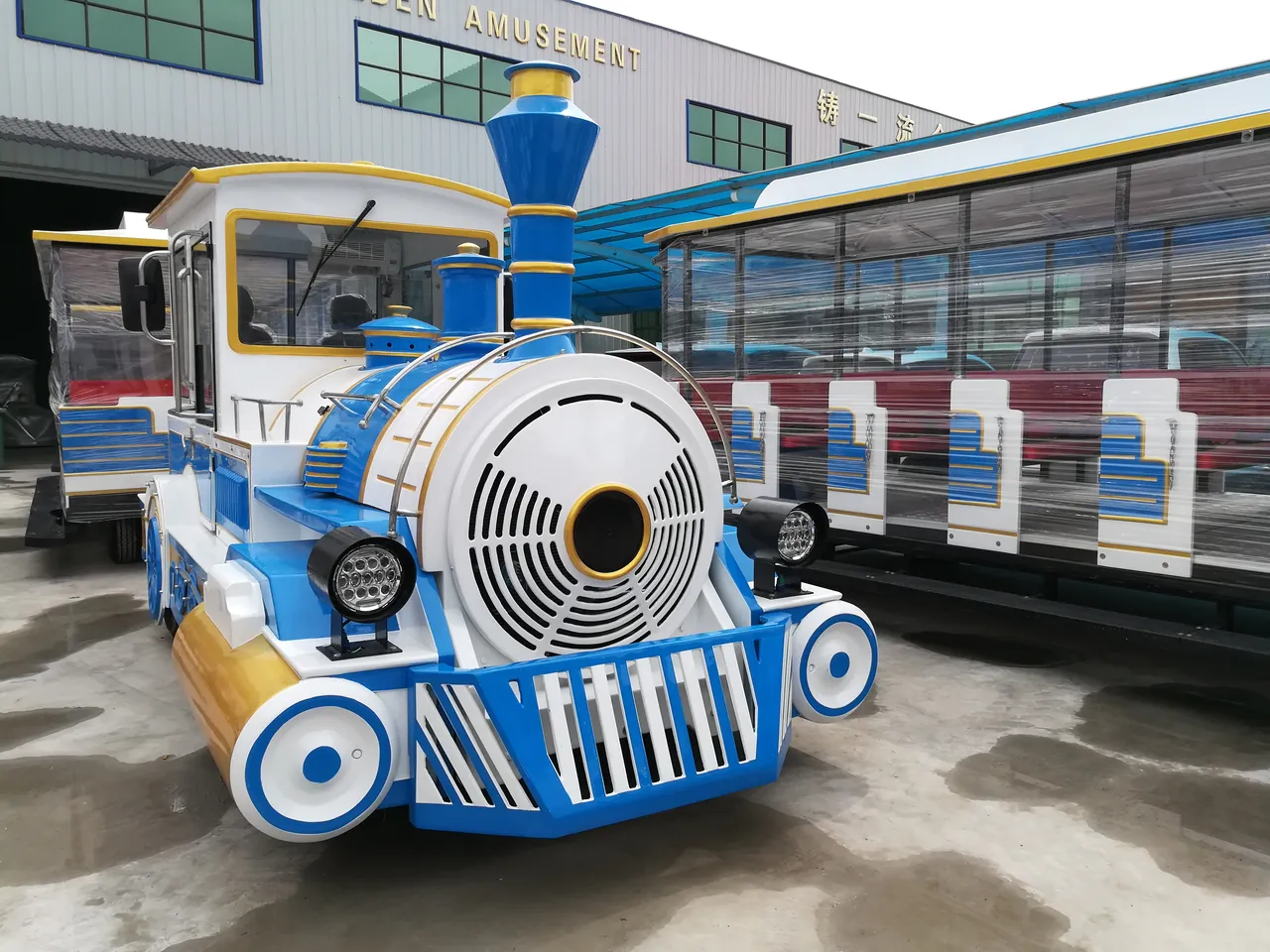
Customization Worth Paying For
- Air conditioning — the option buyers most often regret skipping, especially in the Middle East and Southeast Asia.
- LED and ambient lighting — turns a daylight shuttle into an evening attraction; the night photo below is the same train after dark.
- Color and livery — automotive-grade baked paint in your park colors, with logo and mascot at no extra charge.
- Seat material — PVC over foam for comfort, FRP for the hardest daily use and easiest cleaning.
- Carriage count — start with two, add a third when the queue grows; the coupling is standardized.
- Battery or engine sizing — for sites with gradients, we match the drive to your measured slope before quoting.
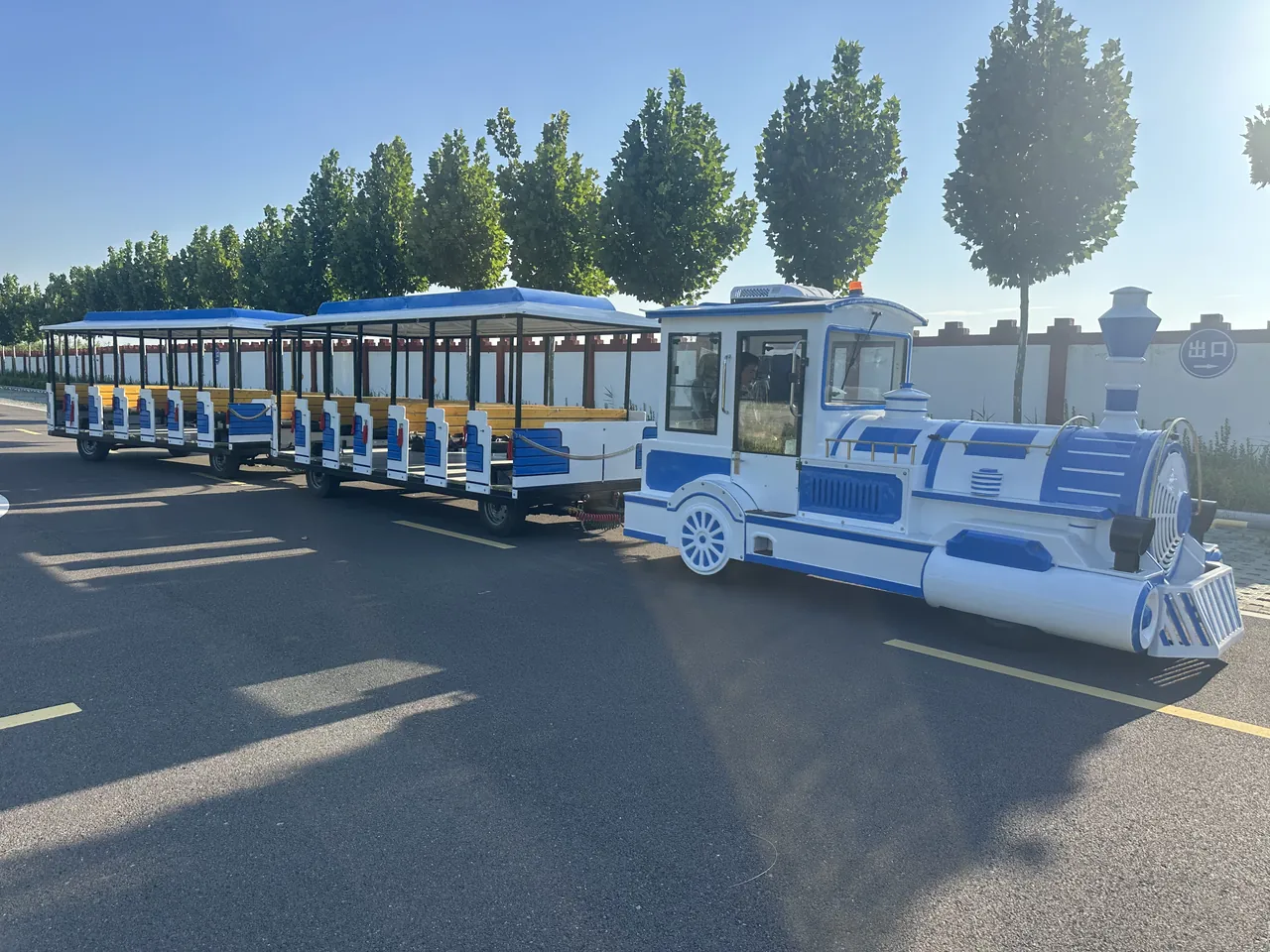
What Moves the Price Inside the Range
Two trains with the same seat count can sit at opposite ends of the range. What pushes a quotation up: more carriages, air conditioning, a larger battery or engine for gradients, custom livery artwork, extra spares, and CIF freight instead of ex-works. What pulls it down: standardized colors, in-stock chassis, ordering before your season starts, and taking the train ex-works from Zhengzhou with your own forwarder.
Indicative 2026 factory ranges: the electric sightseeing train runs US$ 6,000 – 55,000 and the diesel sightseeing train US$ 8,000 – 52,000, ex-works Zhengzhou. Full dimensions, seat options and technical sheets are on the product pages — or send us your route and we will size the train for it.
Maintenance Over Ten Years
These are simple machines by amusement-ride standards, and that is deliberate. Wear parts are standard automotive sizes: 185/70R13 tyres on the locomotive and 165R13 on the carriages of the diesel train, leaf springs of 7 to 10 leaves, ordinary oil and filter service on the diesel, and a battery pack most operators replace once in a decade. Keep two spare tyres, a set of brake pads and one spare controller on the shelf and the train will not lose a working day.
The Checklist We Send Before a Deposit
- Walk the route with a tape: tightest corner, narrowest gate, steepest slope.
- Count the passengers you actually carry at peak, not the ones you hope to carry.
- Choose diesel or electric on charging infrastructure, not on sticker price.
- Confirm local voltage and plug standard for the charger.
- Ask what the quotation includes: ex-works or CIF, spares, training, installation supervision.
- Request the packing drawing and the container count.
- Ask which local registration category applies to low-speed tourist vehicles.
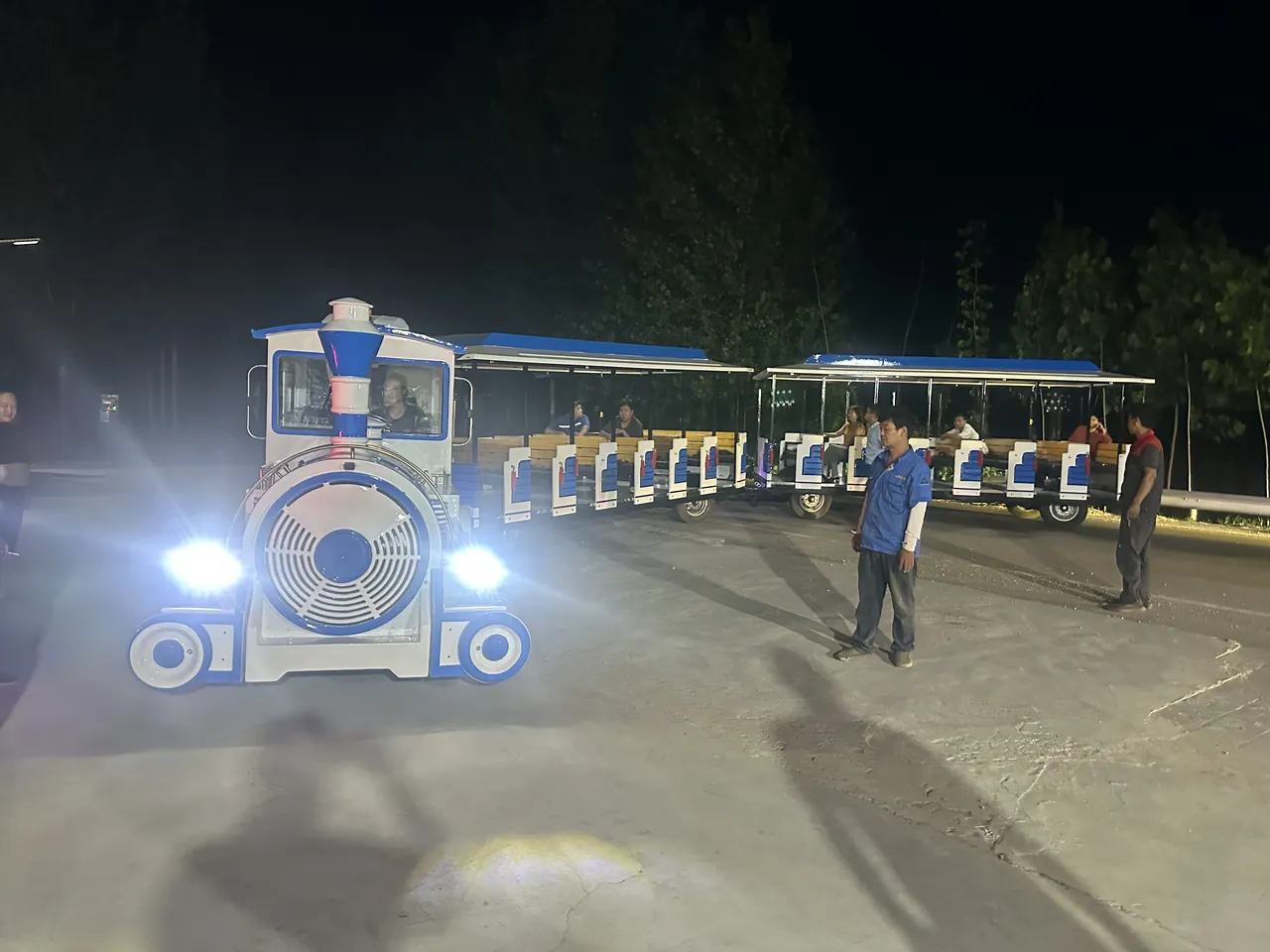
If you would rather have numbers for your own site, send the route length, the gradient and your peak passenger count through the quote form or WhatsApp. We reply with a sized train, the container plan and an itemized factory quotation — usually within 24 hours on working days.
Frequently Asked Questions
What is a trackless sightseeing train?
A road-going tourist train: a locomotive pulling open or glazed carriages on pneumatic tyres, steered by a driver and running on paved paths instead of rails. Parks, resorts, zoos and airports choose trackless because it needs no civil works.
How many passengers can a sightseeing train carry?
Our trains are built in 42, 58 and 72-seat configurations plus a 2-seat locomotive. The 72-seat electric version is a 2-seat locomotive with two 35-seat carriages over a total length of 17.1 m.
How much does a trackless tourist train cost?
Indicative 2026 ex-works ranges are US$ 6,000 – 55,000 for the electric train and US$ 8,000 – 52,000 for the diesel train. Carriage count, air conditioning, battery or engine sizing and shipping terms move the final figure.
Diesel or electric — which should I buy?
Choose diesel for long scenic routes, hills and all-day duty without charging infrastructure; it covers 120–180 km per fill. Choose electric for parks, resorts and indoor or quiet zones where running cost and silence matter more than range.
How many containers does one train need?
A 72-seat electric train ships in one 45 ft container; a 42-seat diesel train with one carriage fits a 40 ft high cube. Packing drawings with exact volumes are issued with every quotation.
How long is the lead time?
Standard production is 15–30 working days for the diesel train, and in-stock chassis can ship the same day an order is confirmed. We schedule production around your opening date.
Buying a ride is a 10-year relationship with a factory. Choose the partner, not just the price.
Get Personalized Advice
Our engineers answer buyer questions daily — site fit, budgets, documents for your market.
Continue Reading
- Carousel Rides: Sizes, Options and Honest Factory Advice →
- Bumper Cars: What We Tell Buyers at the Factory (Not in the Brochure) →
- How to Choose an Amusement Ride Manufacturer in China →
- How Much Does an Amusement Ride Cost? 2026 Price Guide →
- Importing Amusement Rides: Shipping, Customs & Installation →
- Amusement Ride Safety Standards: CE, ISO & Third-Party Inspection →