Starting an Amusement Park: The 8 Rides That Pay Back First
We quote new park projects every week, and the conversation is almost never “which ride is best” — it is “which ride pays back first”. This guide is the answer we give investors: eight rides worth buying first, what they actually cost, and how to model the payback before you wire a deposit.
- Start With the Cash Flow, Not the Landmark
- The 8 Rides Worth Buying First
- What the Eight Rides Cost: 2026 Summary Table
- Three Budget Scenarios You Can Actually Build
- The Costs First-Time Investors Forget
- How to Model Payback Before You Sign
- The Right Order to Spend the Budget
- Five Mistakes That Kill New Park Budgets
Start With the Cash Flow, Not the Landmark
The most common way first-time investors lose money is not buying a bad ride — it is spending 60–70% of the ride budget on one impressive machine, a giant wheel or a coaster, and then discovering the park has nothing that prints steady daily revenue. Big rides fill weekends. Cash-flow rides fill Tuesday afternoons.
The rule we give buyers who are building a park from zero: put roughly two-thirds of the ride budget into cash-flow machines — short cycles, high throughput, low ticket prices that parents pay three times in an afternoon — and one-third into a single anchor that gives the park its name and its skyline. If the anchor eats the whole budget, phase it into year two. The market will still be there, and your park will already be earning while you wait.
Below are the eight rides that earn their place in that first order, with indicative 2026 factory price ranges. All prices are ex-works China, USD, for budgeting only — theming, quantities, options and shipping move the final number.
The 8 Rides Worth Buying First
1. Bumper Cars — the Highest Revenue per Square Metre
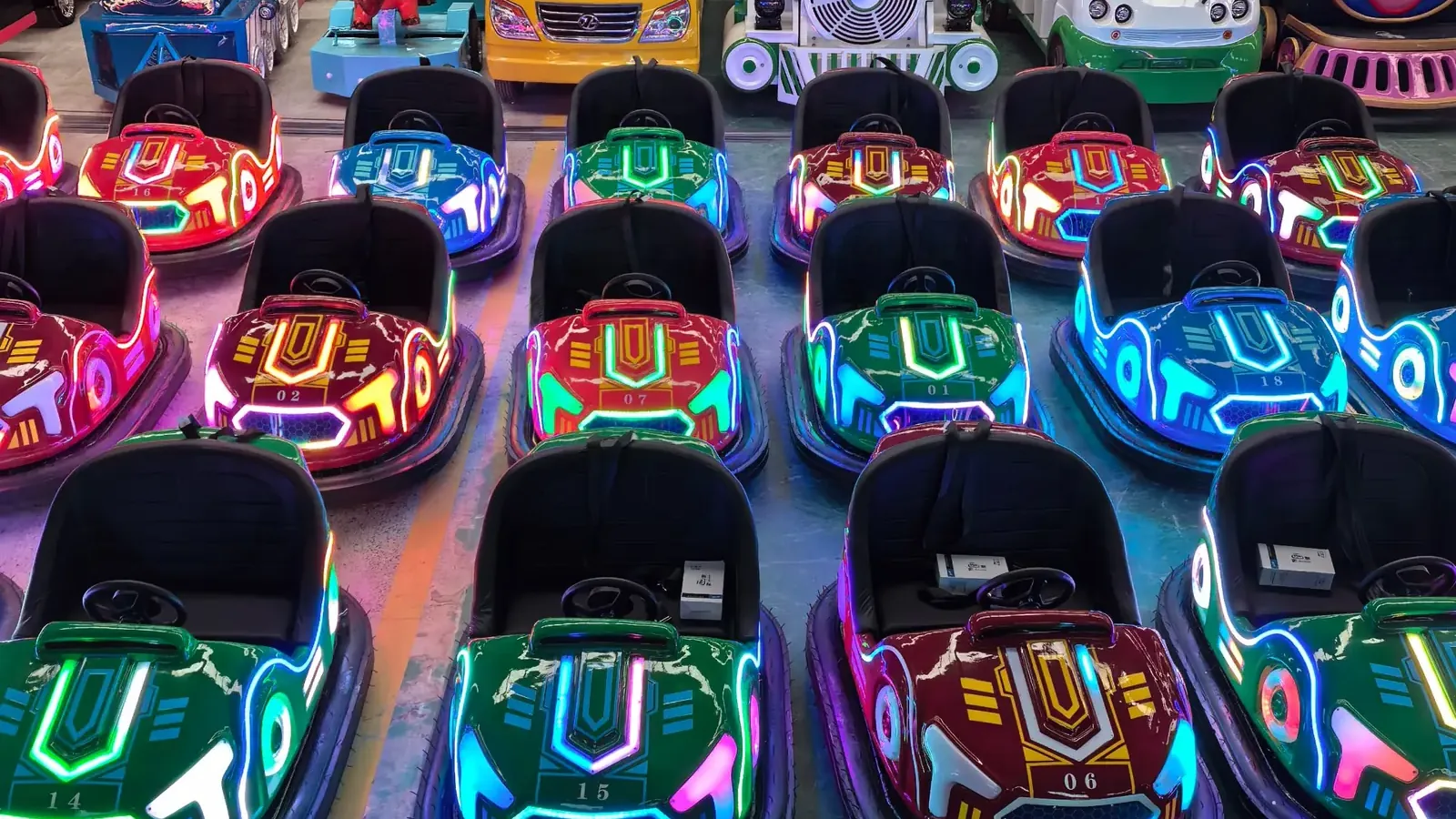
Bumper cars have been out-earning flashier rides for a century, and nothing has replaced them. A 3–5 minute cycle moves enormous volume, one operator runs the whole arena, riders of every age join, and nobody rides just once. A 12-car battery arena on roughly 150–200 m² can clear 150–280 riders per hour in peak time. Indicative pricing: <a href="/products/bumper-cars/bumper-cars/">battery bumper cars</a> at $850–1,500 per car, grid cars at $1,400–2,400 per car, and a complete 12–16 car battery arena — cars, border, chargers, spares — from about $18,000 to $45,000.
2. A Mid-Size Carousel (20–26 Seats) — the Family Anchor
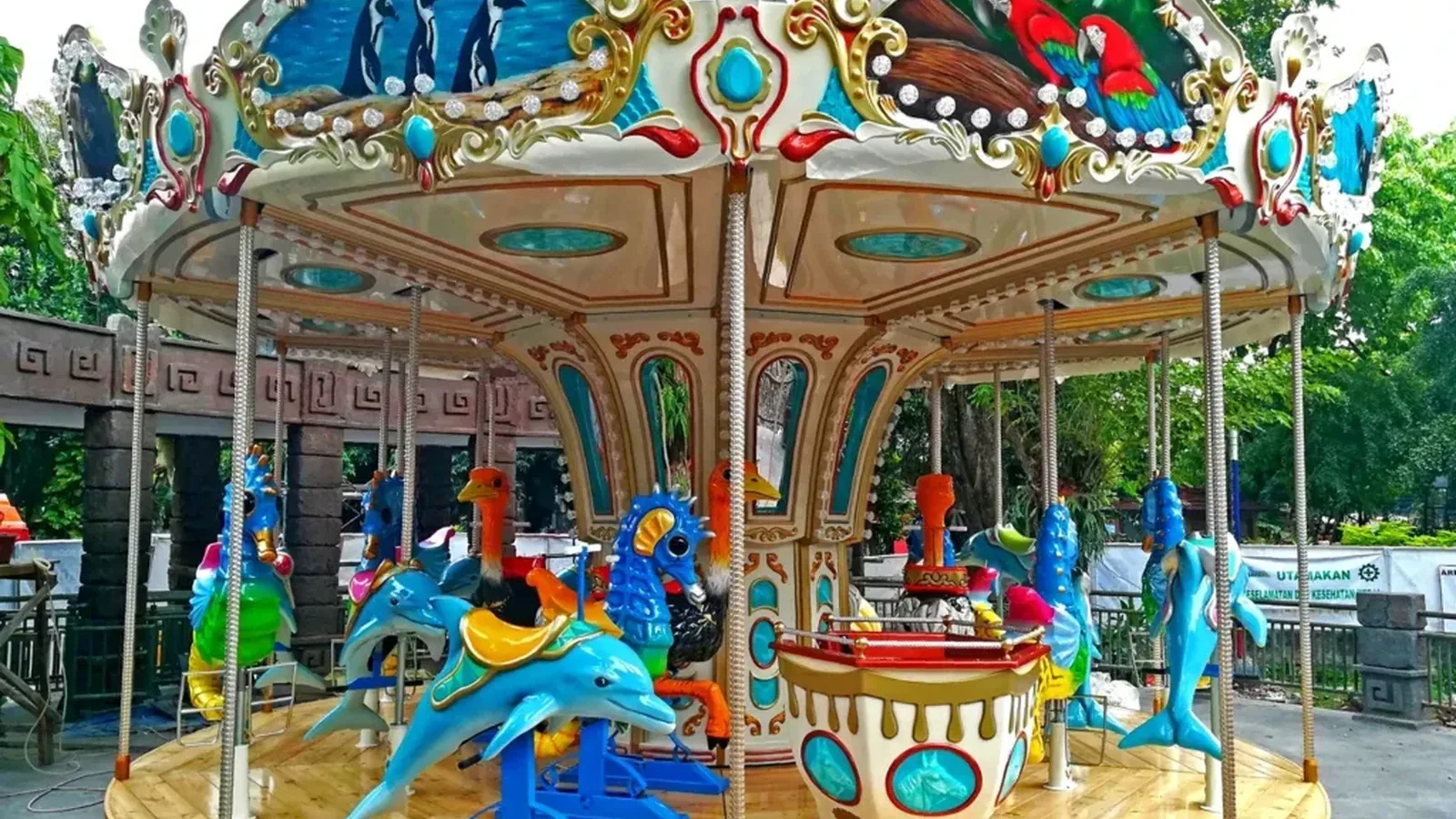
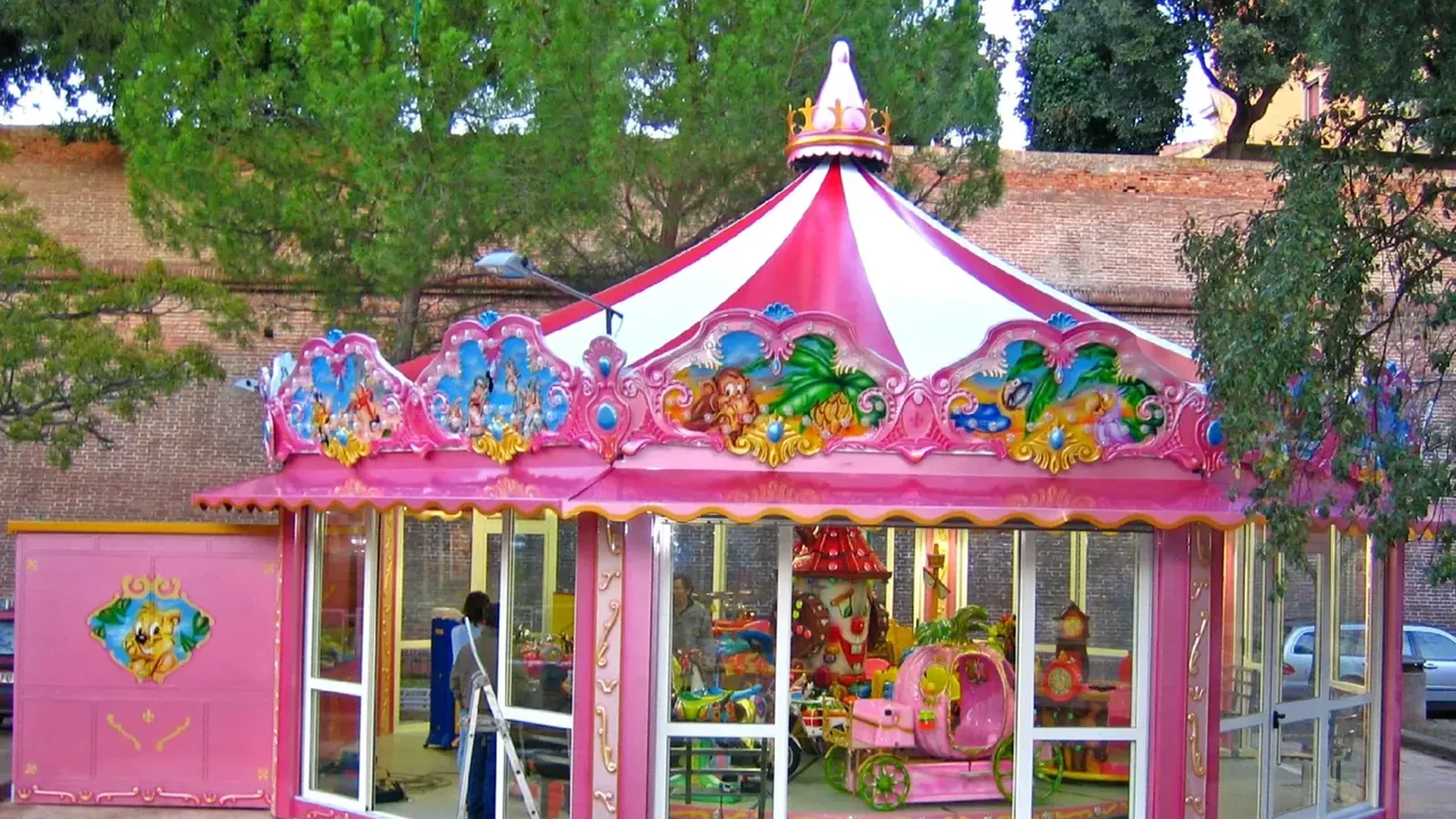
Every park needs the ride that grandparents, parents and toddlers board together, and that photographs well from across the park. A 20–26 seat machine in the 7 m class is the sweet spot: big enough to be the centre of the family area, small enough to fit most sites and one container. Indicative pricing: 12–16 seat carousels $8,000–12,000, 20–26 seat machines $15,000–25,000, and <a href="/products/carousels/kiddie-carousels/">kiddie carousels</a> from about $1,500. A 26-seat unit handles roughly 600 riders per hour.
3. A Trackless Sightseeing Train — Capacity Without Civil Works
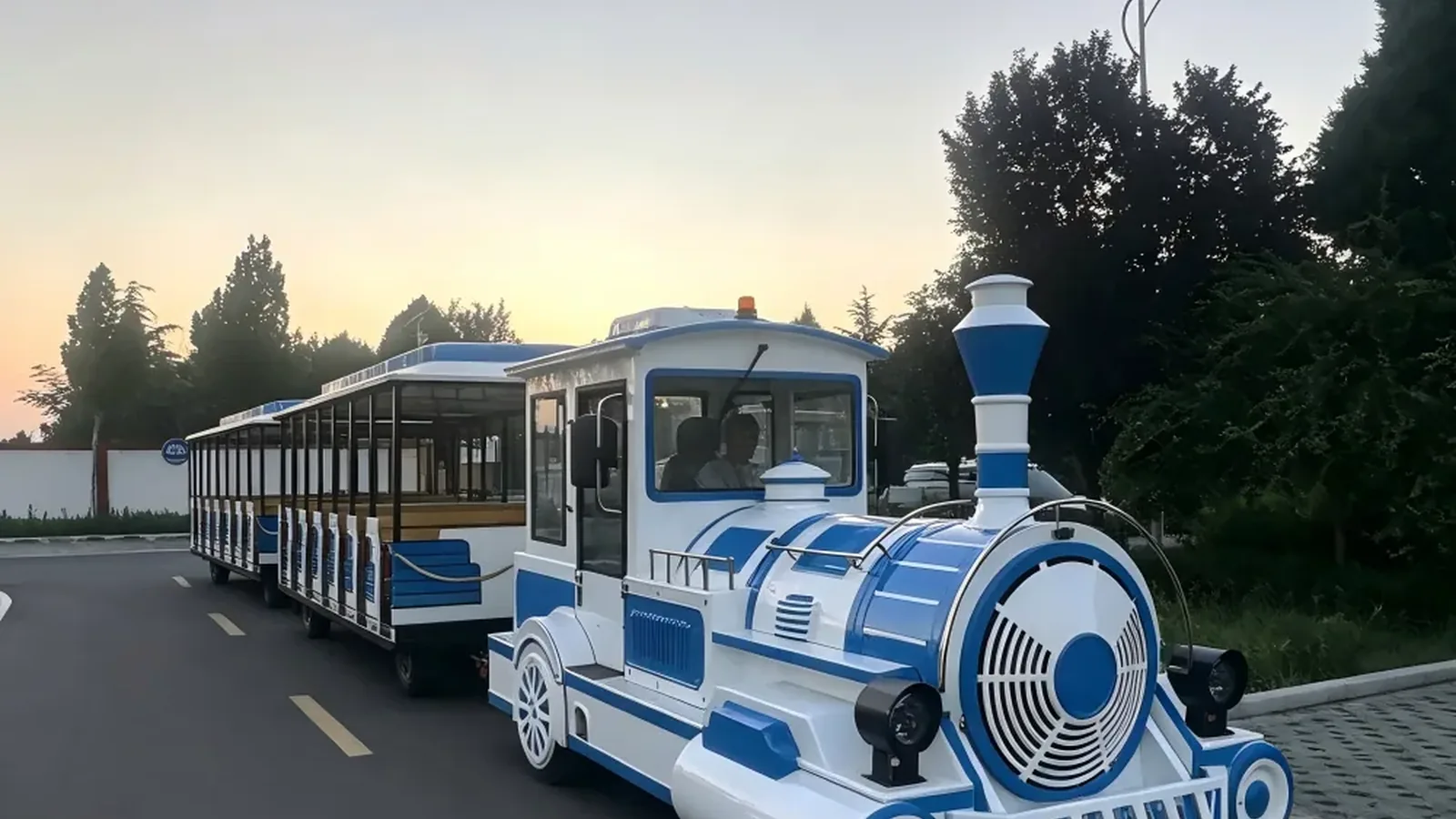
No ride moves more people per dollar than a train, and trackless trains need no rails or foundations: you lay the route with kerbs or paint and start selling tickets the week the train clears customs. Trains also do a second job no other ride does — they carry visitors from the parking lot to the far gate, which lets you charge for transport and attraction at the same time. Indicative pricing: park-size mini trains from about $5,000; full-size <a href="/products/train-rides/electric-sightseeing-train/">electric sightseeing trains</a> (42–72 seats) $6,000–55,000 and <a href="/products/train-rides/diesel-sightseeing-train/">diesel trains</a> $8,000–52,000 depending on carriage count and options.
4. A Kiddie Corner — Three Small Rides That Decide Where Families Go
Children aged two to six decide where the family spends Saturday, and they cannot ride anything above 1.5 metres. A dedicated corner of three small rides — a mini carousel, a <a href="/products/ferris-wheels/kiddie-wheels/">kiddie ferris wheel</a>, and a <a href="/products/train-rides/christmas-mini-train/">mini track train</a> — costs $15,000–30,000 all in, occupies 150–250 m², and earns the highest revenue per dollar spent of anything in the park because the machines are cheap, the cycles are short and the customers ride repeatedly with a paying adult standing next to them.
5. Tea Cups or a Family Spinning Ride — Cheap Thrills, Huge Throughput
Family spinners are the workhorses of the midway: no height or nerve threshold, so the queue is everyone, and each cycle is 2–3 minutes. Indicative pricing for <a href="/products/spinning-rides/tea-cups-8m/">tea cups</a>: a 6-cup 8 m unit $8,000–12,000, a 9-cup 10 m machine carrying 36 riders $15,000–25,000, with hourly capacity around 400.
6. A Mid-Size Pendulum (12 Seats) — the Thrill That Fills the Age Gap
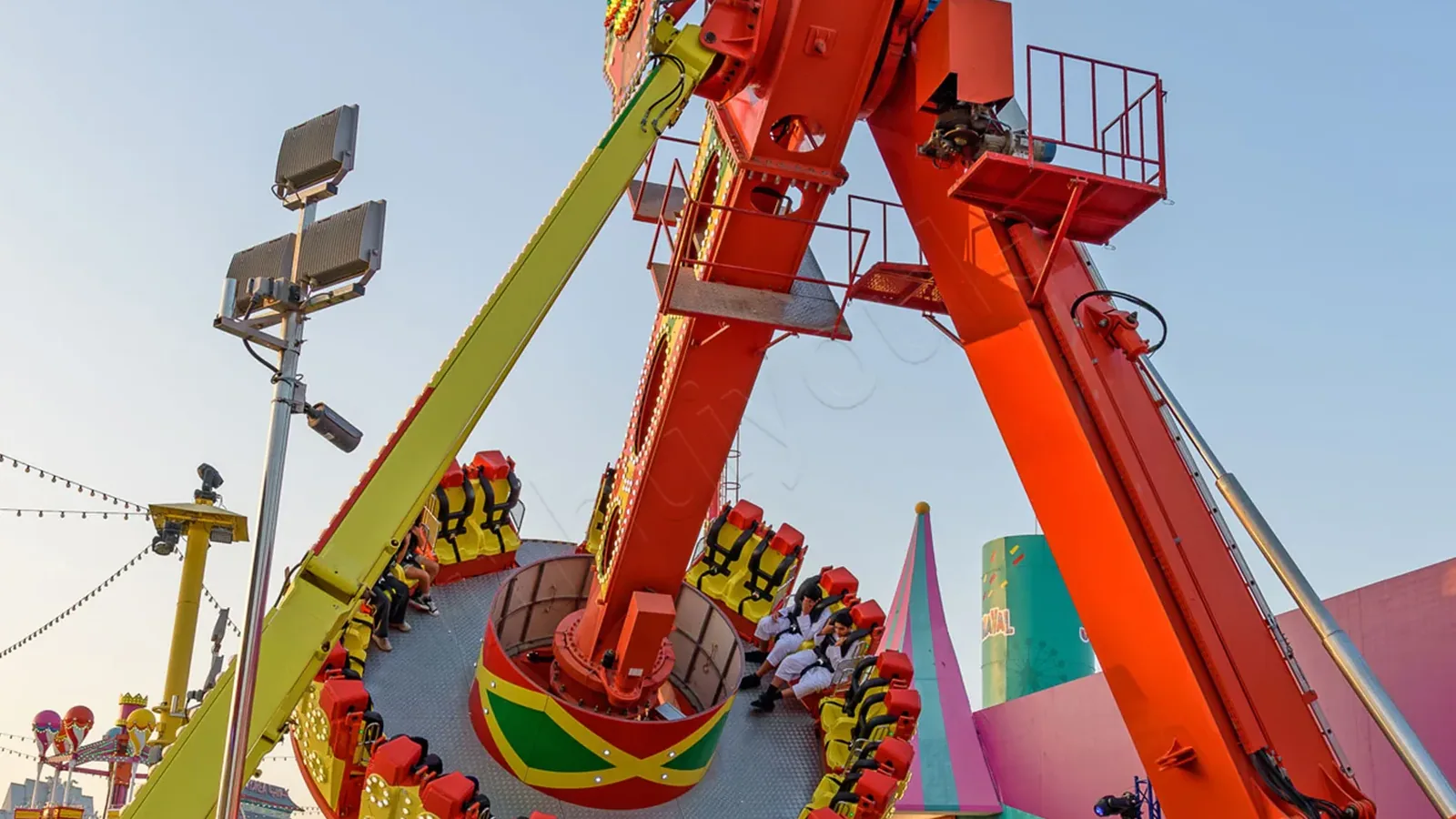
Every park needs something for the 12–25 crowd, and a pendulum delivers it at a fraction of a coaster’s price. Indicative pricing: 6-seat units $8,000–12,000, 12-seat machines $18,000–28,000, 23-seat full-size pendulums $45,000–60,000. Check the safety area before you fall in love — a 23-seat machine wants roughly 20 × 18 m including fences.
7. A Family Coaster — the Ride That Justifies the Gate Price
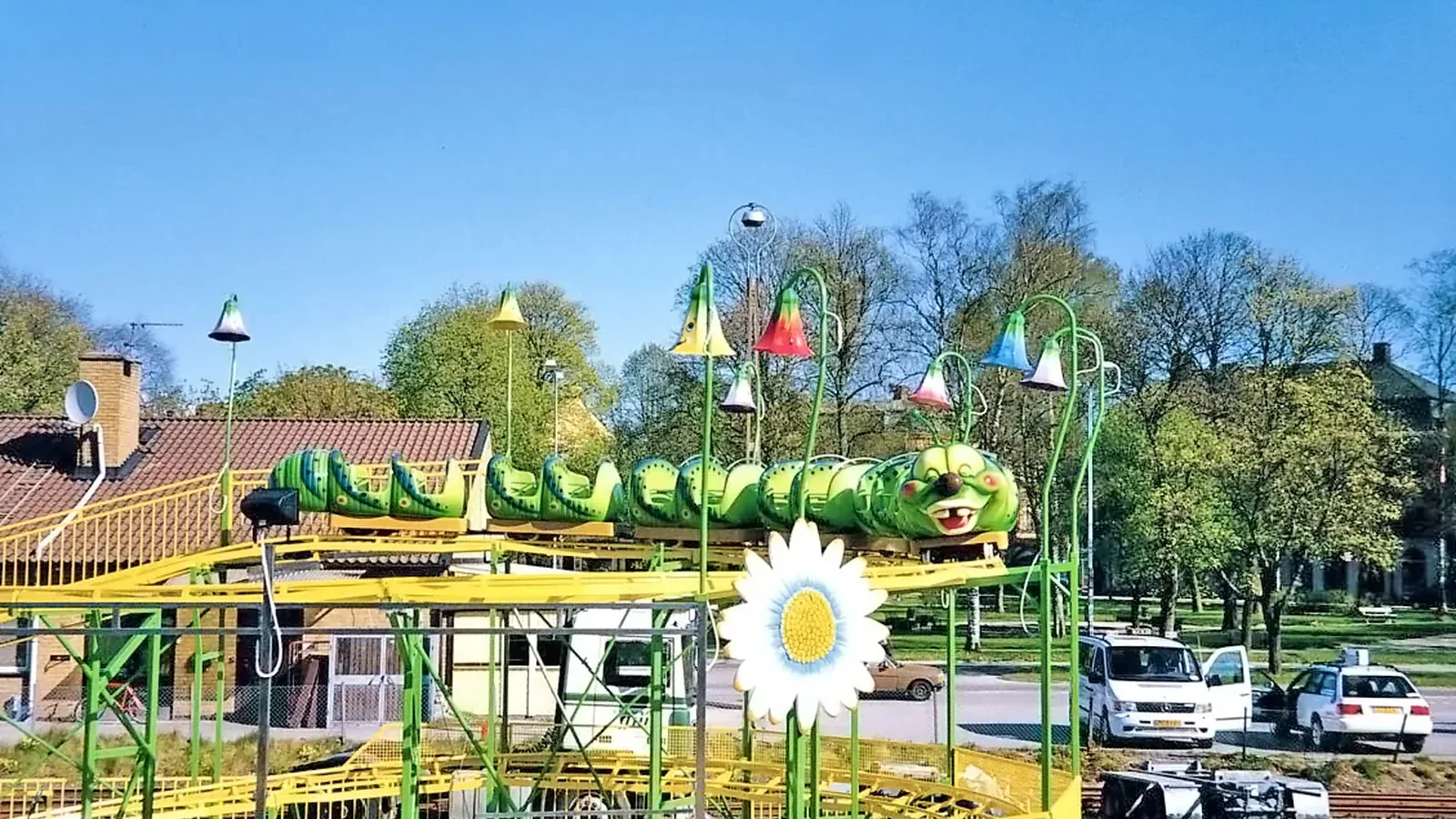
A coaster is what makes a venue feel like a real park rather than a fairground, and it is the photo that sells season passes. The good news is that compact family coasters are no longer theme-park money: <a href="/products/roller-coasters/worm-coaster-120/">compact family coasters</a> in the 14–24 seat class run $15,000–30,000 ex-works. Larger spinning and looping coasters start near $80,000 and climb with length and lift height.
8. A Ferris Wheel — Small Now, Big Later
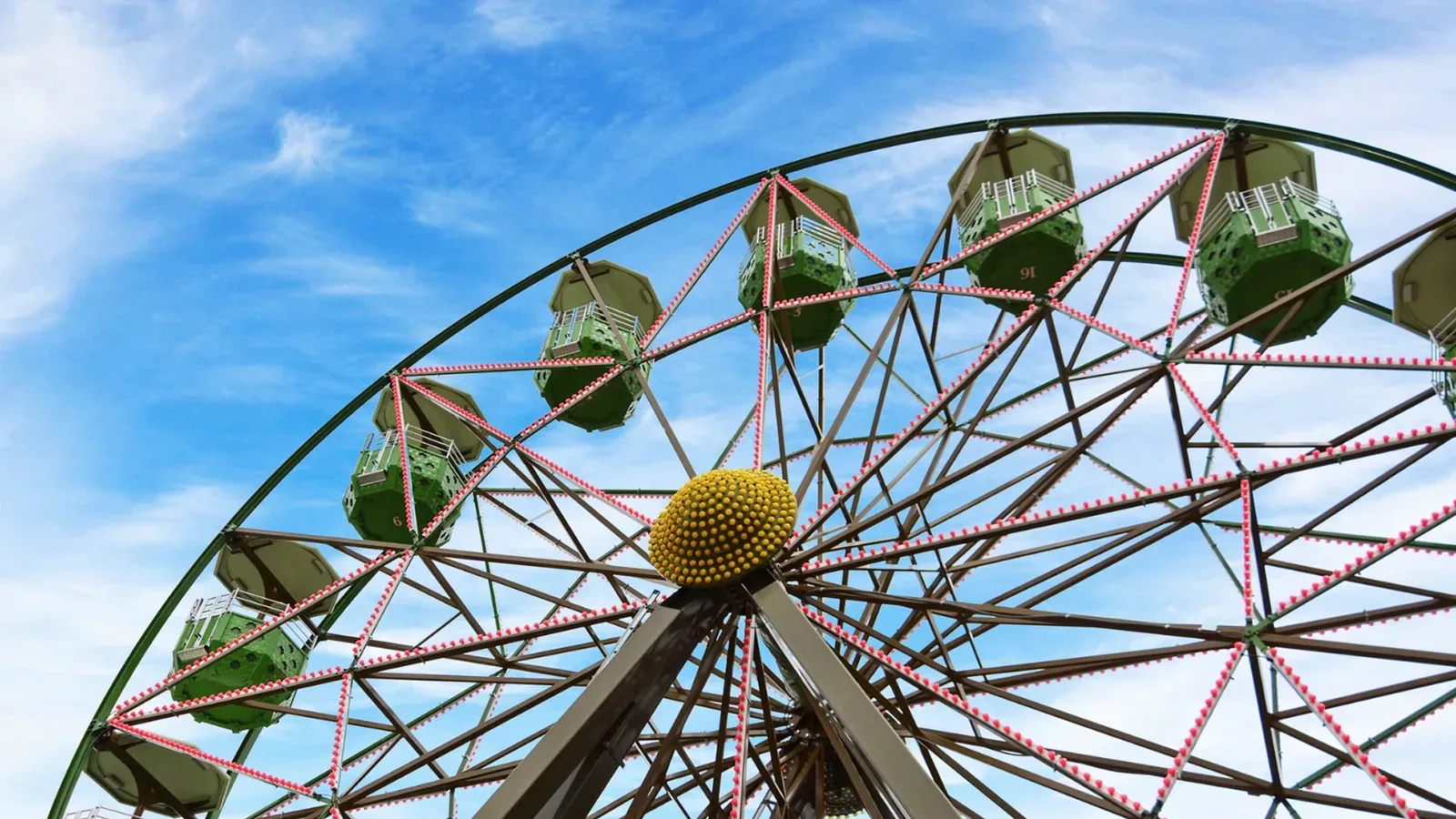
A wheel is the only ride that works when it is switched off: it becomes the park’s signpost, logo and landmark in one. That value scales with height, so buy it in the right order. A 10–12 seat kiddie wheel costs $9,000–15,000 and does most of the photo work for a small park. A 20–25 m wheel with enclosed cabins runs $80,000–200,000 and belongs in phase two, once cash flow justifies a landmark. At 40 m and above you are in the $200,000–800,000 class and should be talking to our engineers about foundations before you talk about paint.
What the Eight Rides Cost: 2026 Summary Table
| Ride | Typical footprint | Capacity (riders/hour) | Indicative price (ex-works) |
|---|---|---|---|
| Bumper car arena, 12–16 battery cars | 150–250 m² | 150–280 | $18,000 – $45,000 |
| Carousel, 20–26 seats | 9–10 m diameter | ~600 | $15,000 – $25,000 |
| Trackless sightseeing train | Paved route, 8 m turning clearance | 250–400 | $6,000 – $55,000 |
| Kiddie corner (3 small rides) | 150–250 m² | 300–500 total | $15,000 – $30,000 |
| Tea cups, 8–10 m | 10–12 m fenced | ~400 | $8,000 – $25,000 |
| Pendulum, 12-seat | 12 × 12 m fenced | ~250 | $18,000 – $28,000 |
| Compact family coaster | 9 × 18 m safety area | 300–400 | $15,000 – $30,000 |
| Ferris wheel, 10–12 seats | 6 × 10 m | 150–200 | $9,000 – $15,000 |
Capacities are manufacturer ratings at full cycle operation; real throughput depends on your staffing and queue discipline. Prices are 2026 ex-works China and do not include shipping, duties or site works.
Three Budget Scenarios You Can Actually Build
Scenario A — an indoor family entertainment centre or small outdoor park. Rides: a 10–12 car battery bumper arena ($20,000–32,000), a 6–9 seat kiddie carousel ($3,000–6,000), a mini train ($5,000–12,000) and a small spinner ($8,000–12,000). Ride budget $40,000–70,000; with fit-out, freight and working capital, a realistic total project of $100,000–180,000.
Scenario B — an outdoor family park on 1–2 hectares. The Scenario A core, plus a 20–26 seat carousel, a 42-seat electric train, a compact family coaster and a 12-seat pendulum. Ride budget $120,000–250,000; with site works, foundations, power, fencing and landscaping, a realistic total of $350,000–700,000.
Scenario C — a regional destination park. Everything in B, plus the landmark tier: a 20–25 m ferris wheel ($80,000–200,000), a larger coaster ($80,000–250,000) and a big pendulum or drop tower ($45,000–150,000). Ride budget $500,000–1.2M; total project commonly $1.5–4M including civil works. If that number is above your budget, build B this year and C with year-one profits — which is exactly how most of the parks we supply actually grew.
The Costs First-Time Investors Forget
- Ocean freight and insurance: typically 8–15% of ex-works price, more for landlocked destinations.
- Import duty and VAT on rides (HS 9505/9508 in most tariffs) — confirm with your broker before ordering.
- Site works: foundations, drainage, paving, fencing, theming and a transformer if your power supply is weak.
- Installation: supervision-only is the economical route for simple rides; factory crews for towers, wheels and coasters.
- Spare parts: budget 1–2% of equipment value per year, and take the start-up spares kit with every shipment.
- Staffing: one trained operator per ride plus maintenance — the most underfunded line in new park budgets.
- Inspection, insurance and any local registration before opening day.
- Pre-opening marketing and a working-capital reserve covering three slow months.
How to Model Payback Before You Sign
The model that matters is simple: annual paid rides × ticket price = gross ride revenue; net of staff, power and maintenance (plan 35–45% net margin on ride revenue before rent), compare against equipment cost. Worked example, a 12-car bumper arena delivered at $32,000: ticket $3, average 1.6 riders per car, a 6-minute cycle, average fill 30% across a 10-hour day over a 200-day season gives roughly 58,000 paid rides and $174,000 gross — equipment cost recovered well inside the first season. Run the same math at half that traffic and it still pays back in season two.
Be honest about the inputs: ticket price is what your market actually pays (it can be $1.50 in some markets and $6 in others), and average fill is never the weekend peak. Model the Tuesday, not the holiday.
The Right Order to Spend the Budget
- Phase 1 (opening): bumper cars, a family anchor ride and the kids’ corner. These three pay for everything else.
- Phase 2 (first-season profits): the train, tea cups and a family coaster to widen the age range and increase dwell time.
- Phase 3 (years 2–3): the landmark — a big wheel, a large pendulum or a tower — bought from cash flow, not from borrowed money.
Five Mistakes That Kill New Park Budgets
- Buying the landmark first and the cash-flow rides with whatever is left.
- Ordering rides before the site plan exists — footprints, turning clearances and foundations are not afterthoughts.
- Comparing quotes purely on price. The difference between quotes is hiding in steel gauge, motor windings and fiberglass lay-up.
- No spare parts on site. A ride that waits a week for a controller costs more than the controller.
- Forgetting that a park is a repeat-visit business: phase your budget so there is something new each season.
Want these numbers for your own site? Send us the location, site size, indoor or outdoor, and your budget through the quote form or WhatsApp — we will return a shortlist of rides that fit, an itemized factory quotation and a container plan, usually within 24 hours on working days.
Frequently Asked Questions
How much does it cost to start a small amusement park?
A small indoor family entertainment centre can open with $40,000–70,000 of rides (bumper cars, kiddie carousel, mini train, a spinner) and a total project cost of $100,000–180,000 including fit-out and freight. An outdoor family park on 1–2 hectares typically needs $120,000–250,000 of rides and $350,000–700,000 all in.
Which amusement ride pays back the fastest?
Bumper cars consistently deliver the best revenue per square metre: short cycles, all ages, one operator, and guests ride repeatedly. A 12–16 car battery arena costing $18,000–45,000 ex-works is the most common first purchase for new operators.
What rides should I buy first for a new park?
The cash-flow trio: a bumper car arena, one family anchor (a mid-size carousel), and a kiddie corner of two or three small rides. Add the train, tea cups and a family coaster from first-season profits, and the landmark ride last.
How many rides does a new park need to open?
Five to eight rides cover most small parks: two or three cash-flow machines, two kiddie rides, one mid-thrill and, if the site allows, one anchor. Throughput matters more than ride count — six busy rides out-earn twelve quiet ones.
Are the listed prices negotiable or fixed?
Published ranges are indicative ex-works prices for budgeting. The quotation depends on quantities, options, theming, shipping terms and season — ordering before your peak season is the single biggest discount most buyers can get.
Does the price include shipping and installation?
No — ranges are ex-works China. Ocean freight adds roughly 8–15%, duties and VAT are payable in your country, and installation ranges from supervision-only to a factory crew depending on the ride.
Buying a ride is a 10-year relationship with a factory. Choose the partner, not just the price.
Get Personalized Advice
Our engineers answer buyer questions daily — site fit, budgets, documents for your market.
Continue Reading
- Carousel Rides: Sizes, Options and Honest Factory Advice →
- Bumper Cars: What We Tell Buyers at the Factory (Not in the Brochure) →
- How to Choose an Amusement Ride Manufacturer in China →
- How Much Does an Amusement Ride Cost? 2026 Price Guide →
- Importing Amusement Rides: Shipping, Customs & Installation →
- Amusement Ride Safety Standards: CE, ISO & Third-Party Inspection →
- Trackless Sightseeing Trains: Sizes, Power Options and Factory Prices →